
Last updated: 12 October 2026
Short answer: yes, most Bali weddings have a noise curfew. But there’s no single island-wide time. Curfews are set by the local banjar (village council), and each venue adds its own rules on top. The best-known example is Uluwatu, where amplified music generally has to stop at 10pm. Check the rules for your exact venue before you plan your reception timeline.
If you’re planning a Bali wedding from Australia, this is one of the details that’s easy to miss until it’s too late. This guide covers how Bali’s music rules work, what usually happens when the curfew hits, and how to plan your night so the dancefloor isn’t cut short.
Who Sets the Noise Curfew in Bali?
In Bali, most local matters are managed by the banjar, the village community council. Noise curfews are one of them.
That means the rules don’t just change from one area to the next. They can change within the same area, depending on which banjar your venue falls under. Two venues a few minutes apart in the same suburb can have different finish times.
On top of the banjar rules, every venue has its own policies. These can cover:
- What time amplified music has to stop
- Decibel (volume) limits
- Where speakers can be set up and which way they face
- Whether music can continue indoors after the outdoor curfew
So when a couple asks us “what’s the curfew in Bali?”, our honest answer is: it depends on your venue and your banjar.
What Is the Curfew in Uluwatu?

Uluwatu has the curfew couples hear about most. Amplified sound generally has to stop at 10pm.
That matters, because Uluwatu is home to many of Bali’s most popular clifftop wedding venues. A sunset ceremony, dinner and speeches can easily take you to 9pm, leaving only an hour of dancing outside before the music has to stop.
Other parts of Bali, such as Seminyak, Canggu, Ubud, Nusa Dua and Jimbaran, follow their own local banjar rules.
Villas vs Hotels and Resorts: Which Is Stricter?
Private villas
Villa weddings follow the local banjar’s curfew, plus any house rules the villa sets. Because rules vary so much from villa to villa, always ask the villa manager or your planner for the exact finish time in writing before you book.
Hotels, resorts and beach clubs
These venues are usually a bit stricter than villas. Most also have a decibel limit, meaning the music has to stay under a set volume all night, not just after the curfew.
That doesn’t mean you can’t have a great party at a resort. It just means your DJ needs to know the limit in advance and set up the sound to suit it.
What Happens When the Curfew Hits?
There are usually three ways the night goes:
- The party moves indoors. Many venues let music continue inside after the outdoor curfew. For example, a wedding on a clifftop lawn might move into the venue’s ballroom or restaurant.
- The reception finishes. If the venue has no indoor space, or the indoor space has the same curfew, the reception ends at curfew.
- Guests head to an after-party. Some couples keep the celebration going at another venue nearby.
Whichever option fits your venue, decide it before the wedding so your guests, planner and DJ all know what happens at curfew.
A Real Example: A 10pm Clifftop Curfew
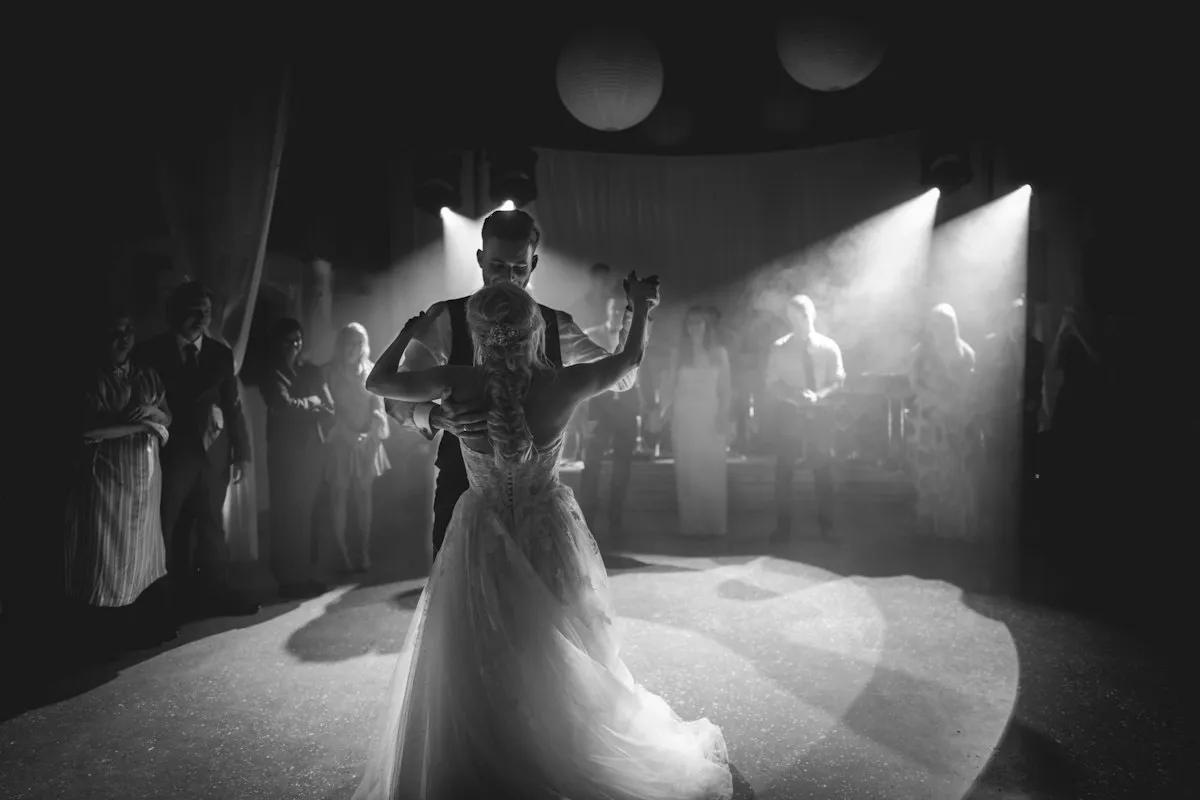
We organised a DJ for a wedding at a clifftop venue. For the first part of the night, the DJ was set up on the cliff, playing outdoors.
When 10pm hit, the music outside stopped and the party moved inside, where the celebration continued.
This is a common way to handle a curfew: enjoy the outdoor setting while you can, then move indoors to keep dancing.
Fees, Permits and Extensions
Depending on your venue and banjar, there can be extra costs connected to music and noise, such as fees for live entertainment or for running music later. These are different from place to place, so there’s no standard figure.
Ask your venue or planner:
- Are there any banjar fees for amplified music or entertainment?
- Is it possible to extend the music past the standard finish time, and what does it cost?
- Are there deposits connected to noise or the venue’s rules?
Nyepi and Ceremony Days: When Music Isn’t Allowed
Nyepi (Bali’s Day of Silence)
Nyepi is the Balinese Day of Silence. For 24 hours, the whole island goes quiet: no music, no events and no celebrations. If your preferred wedding date falls on Nyepi, you’ll need to move it.
Nyepi falls on a different date each year. In 2027, it falls on 9 March.
Ceremony days
Local religious ceremonies can also affect when music is allowed on certain days. Your wedding planner can speak to the local banjar to find out whether any ceremonies fall on or around your date.
Your venue or planner will know the local calendar, so ask about both Nyepi and ceremony days as soon as you’re considering a date.
How Star DJ Hire Helps
When you book a Bali wedding DJ with us, we liaise with your venue or planner to check the rules beforehand. That includes the curfew time, any volume limits, and where the DJ can set up.
Knowing the rules before the day means we can help you:
- Plan your timeline so the best dancing happens before curfew
- Set up to suit the venue’s volume and speaker rules
- Prepare for a smooth move indoors, if your venue allows it
Questions to Ask Your Bali Venue About Music
Before you sign a venue contract, ask:
- What time does amplified music have to stop, outdoors and indoors?
- Which banjar is the venue under, and does it have its own rules?
- Is there a decibel limit?
- Are there rules on speaker placement or direction?
- Can the party move indoors after curfew?
- Are there any fees or deposits related to music or entertainment?
- Does our date clash with Nyepi or any local ceremony days?
Send the answers to your DJ. They make planning the night much easier.
Frequently Asked Questions
Is there a noise curfew for weddings in Bali?
Yes, most weddings in Bali have a curfew for amplified music. There’s no single island-wide time. Each local banjar sets its own rules, and venues add their own policies on top.
What time does wedding music have to stop in Uluwatu?
In Uluwatu, amplified sound generally has to stop at 10pm. Confirm the exact time with your venue, as rules can vary between banjars.
Do villas or resorts have stricter music rules?
Hotels, resorts and beach clubs are usually a bit stricter than villas, and most have a decibel limit. Every venue has its own rules, so always check.
Can the party keep going after the curfew?
Often, yes. Many couples move the party indoors, such as into a ballroom or restaurant. Others finish the reception or continue at an after-party at another venue.
Can I get married in Bali on Nyepi?
No. Nyepi is Bali’s Day of Silence, when the whole island stays quiet for 24 hours and no celebrations take place. In 2027, Nyepi falls on 9 March, so check the date before you lock in your wedding.
Will my DJ check the venue’s noise rules?
At Star DJ Hire, we liaise with your venue or planner to check the curfew, volume limits and setup rules before your wedding.
Plan Your Bali Wedding Music With Confidence
A curfew doesn’t have to cut your celebration short. With the right venue questions and a timeline built around the rules, your dancefloor can stay full right up to the last song, and beyond if the party moves inside.
Explore our Bali wedding DJ hire →
For more planning help, read our guide to Bali wedding DJ hire for Australian couples.